
Search
H2020 program / Horizon Europe

SEATRACE

Tracking marine pollutant cocktails and their ecological impact with advanced analytical, technological and toxicological tools

Principal Investigator
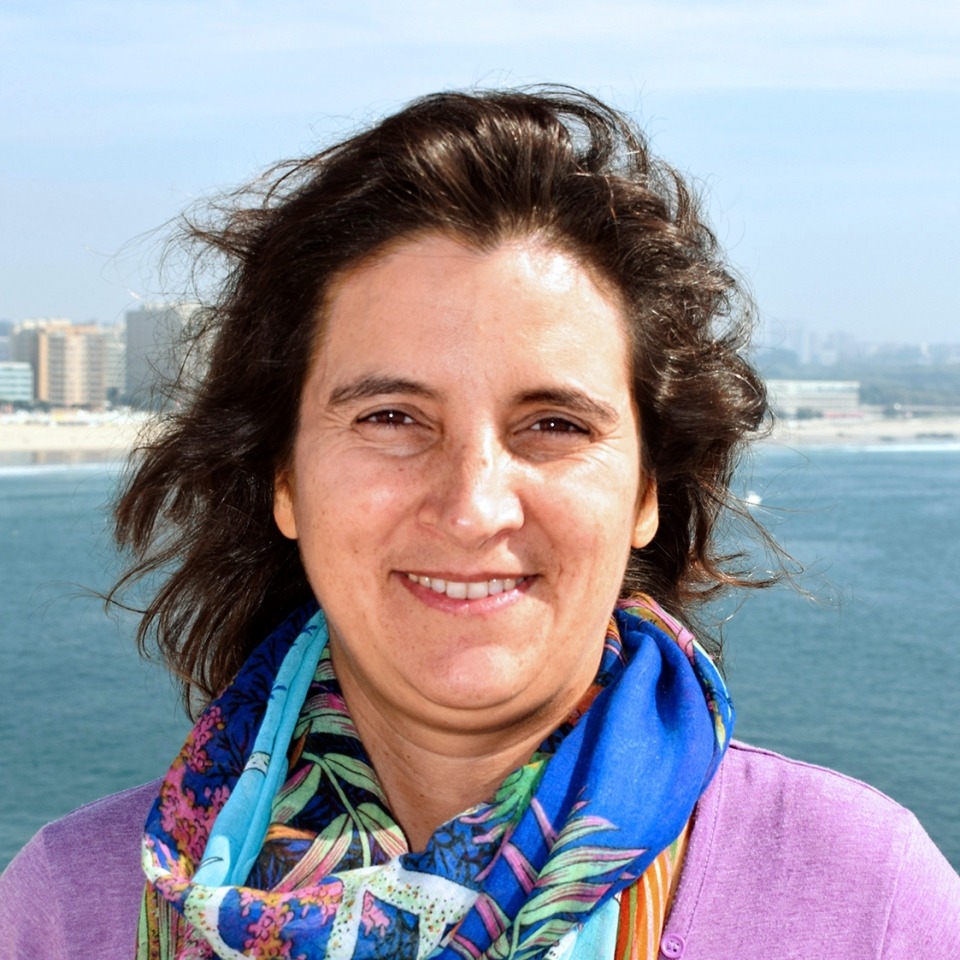
imgs_i3yac_ref.ana_paula_mucha1-1.jpg
Group Leader

Ana Paula Mucha has a Degree in Aquatic Sciences (1993), a MSc in Ecology, Management and Modelling of Aquatic Resources (1997) and a PhD in Aquatic Sciences (2002). She has a research position at CIIMAR, University of Porto, Portugal, being member of the Board of Directors and the Principal Investigator of the ECOBIOTEC Team (Bioremediation and Ecosystems Functioning).

Also, she is an Invited Assistant Professor at the Department of Biology of Faculty of Sciences of University of Porto. She focuses her research on the relation between microorganisms and contaminants, aiming the development of bioremediation technologies for ecosystems recovery and environmental sustainability. She also explores the microbe-plant associations for the development of nature-based solutions for water management, and the microbe-animal interactions to increase environmental sustainability of aquaculture production.

She authored ca. 90 SCI papers including high profile journals in the field of Marine and Environmental Sciences. She has been involved in multiple regional, national and international projects, and presently coordinates CIIMAR participation in the European project “BIOSYSMO – BIOremediation systems exploiting SYnergieS for improved removal of Mixed pOllutants” (GAP-101060211). Also she coordinates the project “Ocean3R – Reduce pressures, restore and regenerate the NW-Portuguese ocean and waters” (NORTE-01-0145-FEDER-000064), and the Research Line 4 (Marine biobanks as tools for marine biotechnology) in the structured program of R&D ATLANTIDA – Platform for the monitoring of the North Atlantic Ocean and tools for the sustainable exploitation of the marine resources” (NORTE-01-0145-FEDER-000040). In addition, she has been involved as supervisor in several national and European Master and PhD programmes, and presently she co-coordinates the FCUP team responsible for the M2ex-European Joint Doctorate “Exploiting metal-microbe applications to expand the circular economy” (European Union; Horizon 2020 research and innovation programme under the Marie Sklodowska-Curie grant agreement No 861088).

RESEARCH GROUPS:

SEATRACE will deepen knowledge of marine pollution by characterizing complex cocktails of marine pollutants (MrPs) in coastal regions of the Atlantic, Arctic and Indian Oceans, and Mediterranean Sea. This will be accomplished by determining hazardous MrPs and assessing their toxicity on key marine organisms across global climate change and their cumulative effects on marine communities and human health. Active and passive sampling approaches, bio/chemical analytical methods, aquatic sensors and drones, and next-generation cumulative risk assessment will be applied. A key innovation is the integration of the monitoring tools with effect-based methods (EBMs) including effect-directed analysis (EDA) to identify and prioritize hotspots at risk and toxic components within MrPs mixtures, enhancing the accuracy of ecological and human health risk assessments. The human exposure to seafood-borne MrPs will be assessed in seafood health and economy, providing strategies to enhance seafood safety confidence and support fisheries trust. SEATRACE will strengthen European Union (EU)-India research collaboration on MrPs and plastic litter through the joint work of EU and Indian organization. Additionally, the Indian partners will apply innovative pilot solutions to reduce marine plastics at key hotspots, including waste recycling to meet national requirements. They will contribute with expertise across the seawater management value chain, from knowledge providers to end-users. SEATRACE will address the following mid-term outcomes: i) exploitation of four monitoring tools including Passive sampling (chemical, plastic litter, and parasitic copepods), bacterial and human cell-based new approach methods (NAMs), optical sensors and drones and the application of EBMs/EDA to marine environments; ii) development of robust, evidence-based tools and models for risk assessment and policy making at local and global scales; and iii) fostering EU–India cooperation for harmonized and effective protection of marine ecosystems and public health.

Leader Institution
Agencia Estatal Consejo Superior de Investigaciones Cientificas (CSIC), IDAEA, Spain
Program
Horizon Europe
Funding
Other projects