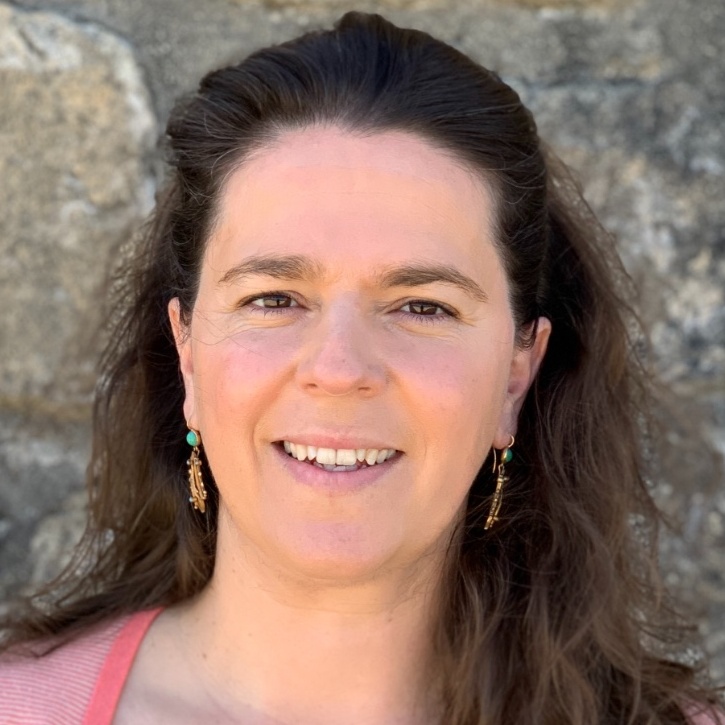
I am an Assistant Researcher and leader of the Deep-Sea Biodiversity and Conservation Research Team (DEEP) at CIIMAR – University of Porto (Portugal), and an invited Associate Professor in Deep-Sea Biology at the Department of Biological Sciences of the University of Bergen (Norway). I hold a PhD in Biology (2009, University of Amsterdam) and a degree in Marine Biology (2003, University of the Azores). My research focuses on the understanding of basin-scale diversity, biogeographic, and connectivity patterns of deep-sea vulnerable marine species and habitats (e.g. sponge grounds, cold-water coral gardens), using a combination of disciplines (taxonomy, systematics, ecology and genetics), and exploration and sampling tools (remotely operated vehicles, towed cameras). I also strive to advance the science-policy-society interface, working with local communities to integrate their knowledge and perceptions on marine biodiversity into decision-making; as well as developing tools and transferring knowledge to support the implementation of agreements and instruments for sustainable management, conservation, and restoration of deep-sea habitats. Over the years, I have trained and mentored over 30 students from BSc to PhD levels in the fields of sponge taxonomy, systematics, phylogenetics, and population genomics. I co-coordinated the H2020 SponGES project, and currently coordinate the DEEPbaseline project, an awardee of the Ocean Conservation Fund, and the SponBIODIV project funded in scope of the European Biodiversity partnership (Biodiversa+). I collaborate with a vast network of scientists from around the globe, as well as with local fishing communities.
The Madeira archipelago offers an interesting opportunity to study marine habitats, the organisms that live there, and how they will be affected by or respond to changes in the environmental conditions around them. Marine communities in Madeira’s coastal habitats have been thoroughly surveyed over the years, with recent studies documenting patterns and processes related to anthropogenic pressures, including marine invasive species, ‘tropicalisation’ and marine litter. However, the vast majority of these studies have focused solely on coastal habitats and on biofouling communities. As is the case in many parts of the world, Madeira’s mesophotic and deep-sea habitats remain largely unexplored. Deep-sea exploration around the island of Madeira has been limited to occasional scientific expeditions since 1960. However, recent studies have identified unique organisms and habitats, including isolated corals (Scleractinia), forests of shade-tolerant kelp, black coral and whip coral gardens, sponge aggregations and crinoid aggregations.
The main aim of the DARWIN_Lab project is to continue the exploratory work begun in 2019 and, with a multidisciplinary team, to carry out a rigorous characterisation and mapping of mesophotic and aphotic habitats, as well as to identify the relevant factors that may affect community structure at a local scale, whilst also comparing these findings with other regions within the Atlantic context. Furthermore, the DARWIN_Lab project will use the mesophotic and aphotic habitats of Madeira as a case study to better understand local, regional and global geographical patterns of biodiversity, ecosystem functioning and the ecological characteristics of coastal habitats at depths between 30 and 800 metres, and to determine how these may be influenced by different human pressures and environmental conditions (e.g. temperature regime, light, sedimentation, maritime traffic, litter, fishing, human population density). By using the island of Madeira as a Natural Laboratory in a joint and pioneering effort, this project will utilise available modern technologies, including scientific divers, a drifting deep-sea camera, ROVs, artificial structures, ‘quick-release’ systems and BRUVs, as well as a multidisciplinary team, to address various gaps in our understanding of the ecology of mesophotic and aphotic marine habitats.