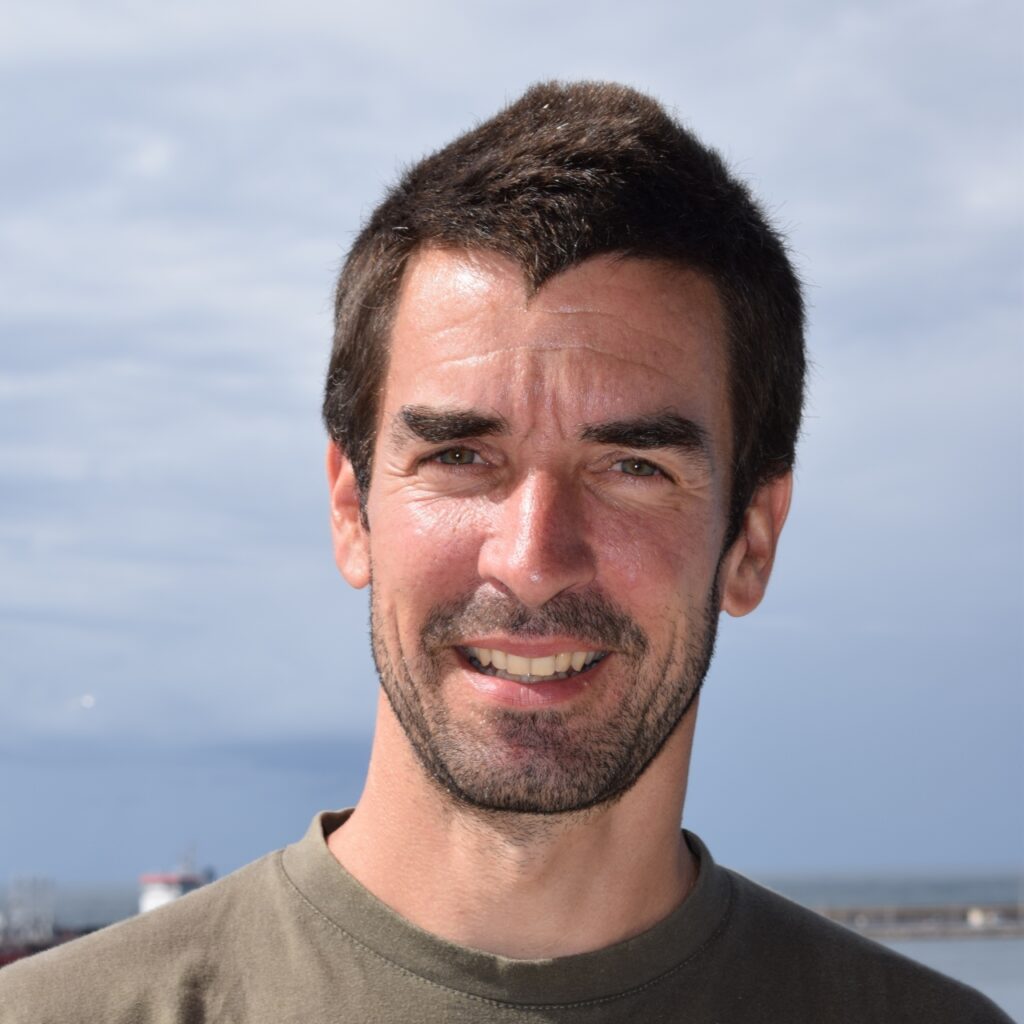
Ralph Urbatzka is a principal researcher at CIIMAR, and team leader of “Biodiscovery for Health”. He graduated in Biology in 2002 in Cologne, Germany and received his PhD in 2007 in Molecular Biology from the Humboldt-University Berlin, Germany. His current research interests focus on the bioactivity screening and elucidation of molecular mechanism of natural products from aquatic ecosystems, in particular for metabolic diseases.
Overweight and obesity are among the main public health challenges, being significant risk factors for various chronic diseases, including cardiovascular disease and the development of diabetes. In 2022, more than half of the European Union’s population aged 16 and over was overweight, a figure that also applies to Portugal (Eurostat 2022). To tackle this problem, lifestyle changes are employed to manage excess weight, often in conjunction with a nutraceutical or pharmacological approach. Solutions based on natural compounds stand out for their safety, accessibility and action via multiple mechanisms (such as satiety and thermogenesis), but they often lack proven efficacy. Chlorophyll (Chl) derivatives from microalgae have demonstrated appetite-suppressing and triglyceride-lowering effects, as well as significant antidiabetic properties, positioning these microorganisms as promising candidates for the development of new products in the nutraceutical sector. Despite its potential, the use of microalgae in this sector remains limited, presenting a strategic commercial opportunity. Necton, as a producer and marketer of microalgae-based products, sees this as a favourable environment for the development of innovative products. Accordingly, the CHLOROFIT project aims to utilise microalgae and develop methods for the extraction and processing of chlorophyll (Chl) into derivatives with anti-obesity and anti-diabetic properties, with a view to developing new nutraceutical ingredients. To this end, the Consortium has defined specific objectives that constitute clear R&D challenges, such as increasing Chl productivity using scalable methodologies and random mutation. To overcome difficulties in scaling up cultivation, the consortium intends to develop, using machine learning approaches, digital models of bioreactors to optimise the cultivation process. Another objective is to develop an efficient, scalable and economically viable biorefinery process that enables the efficient extraction, separation and conversion of Chl into bioactive derivatives. To demonstrate the efficacy and safety of the extracts obtained, they will be characterised and tested in in vivo zebrafish models, identifying the most promising ones for the target applications. In addition, the project will assess the stability and toxicity of the new extracts to ensure their safety. Led by Necton, in collaboration with CIIMAR, GCL and CCG, and with Fykia Biotech as a partner organisation, the Consortium brings together experts in biotechnology, process engineering and digital technology to achieve the planned objectives. As such, the project will adopt a multidisciplinary and dynamic approach, based on research, development and the optimisation of production and biorefinery processes, enabling Necton to launch innovative, effective, distinctive, safe and high value-added products onto the market. The CHLOROFIT project thus aims to promote environmental sustainability through the exploitation of natural resources, as well as to strengthen the competitiveness of Necton and the other co-promoters in the domestic and international markets.