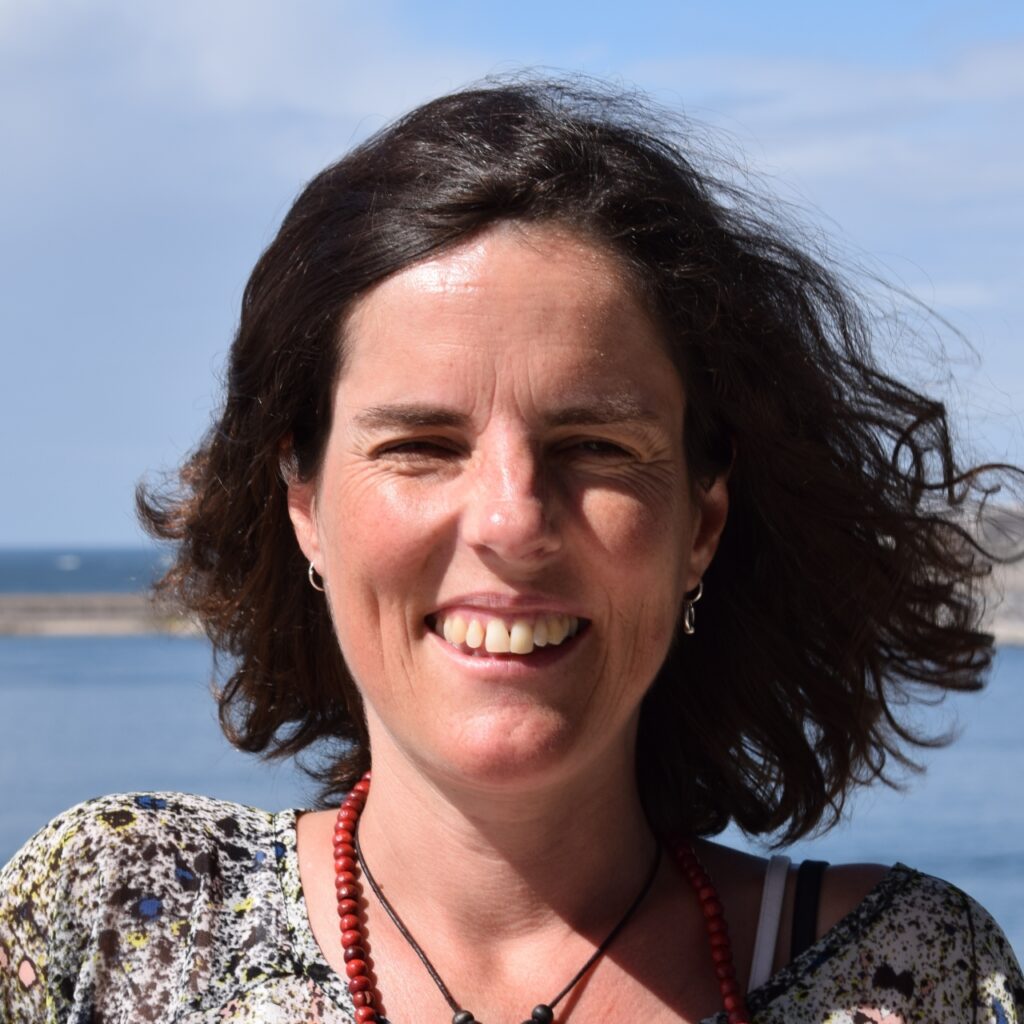
I’m a biologist and the leader of the Fish Ecology and Sustainability research team. My primary research area is marine ecology, specifically concerning fish communities. I’m particularly interested in understanding how human activities, including marine litter and microplastics, impact ecosystems and their ability to provide services and societal benefits. In my research, I’ve been employing innovative approaches to leverage stakeholder knowledge, as Fishers Ecological Knowledge, and provide scientific support to environmental managers and decision-makers. Throughout my career, I’ve bridged the gap between science and society, advocating for stakeholder integration in science, fostering collaborative solutions for environmental issues, and promoting Ocean Literacy.
Microplastics (MPs) have emerged as a globally concerning contaminant, they are ubiquitous in marine environments and pose significant threat to organisms as well as ecosystems. Despite recent scientific advances in our understanding of microplastic toxicity at the organism and cellular levels, critical knowledge gaps persist. We still don’t know if these effects extend to the population and community levels. We also don’t know how microplastics may ultimately compromise the ecological processes and services that marine ecosystems provide. These services include oxygen production, carbon sequestration, and supporting fisheries. Addressing these gaps requires robust, large scale field datasets. However, current monitoring methodologies rely heavily on intensive manual labor, making them costly and time consuming. These methodologies are also poorly suited for generating the time-series data needed for rigorous ecological assessments. Planktastic aims to establish an integrative framework to assess the environmental impacts of MPs on plankton, which are vital components of marine food webs and key indicators of ecosystem health. Planktastic brings together an international, multidisciplinary team of experts in marine ecology and robotics engineering to develop and validate a suite of complementary tools that address the entire process, from data collection to environmental management support.
Planktastic is organized into six work packages. WP1 will compile an open-access baseline dataset of MPs and planktonic communities (e.g., phytoplankton, zooplankton, and fish larvae) from estuarine and coastal regions in Portugal. This dataset will be created in accordance with FAIR data principles to enable data sharing with other databases (e.g. CIIMAR Watch; and larger international databases such as EMODNET). WP2 will develop a novel, in situ spectroscopic detection system that integrates high-resolution, multispectral imaging with embedded machine learning. This system will enable the autonomous and cost-effective identification and characterization of MPs and plankton groups in real field conditions. WP3 will investigate the biological impacts of MPs by using fish larvae as a proxy for ingestion and tissue-level effects and by analyzing plankton community structure, functional life forms, phytoplankton diversity (via eDNA), and photosynthesis efficiency to study the ecological impacts. WP4 will integrate all developed tools into a practical management framework co-designed with relevant stakeholders, including environmental agencies, fisheries institutes, maritime authorities, and NGOs, to support implementation in ongoing and future marine monitoring programs. WPs 5 and 6 will ensure effective project management, communication, and dissemination to scientific and non-scientific audiences. A key innovation of Planktastic is the integration of citizen science principles through the deployment of an autonomous detection system aboard vessels of opportunity. This dramatically increases the amount of data collected while reducing costs. Planktastic will produce at least four peer-reviewed publications, two research employment positions, and a transferable framework applicable to diverse marine ecosystems and regions beyond Portugal. As well as advance both the technological and analytical state of the art to deliver essential scientific evidence and practical tools that support policy and governance responses to plastic pollution. These contributions will directly support o UN Sustainable Development Goal 14 and the EU Marine Strategy Framework Directive.